Dr. Gymbro
←

#protein intake

4 articles
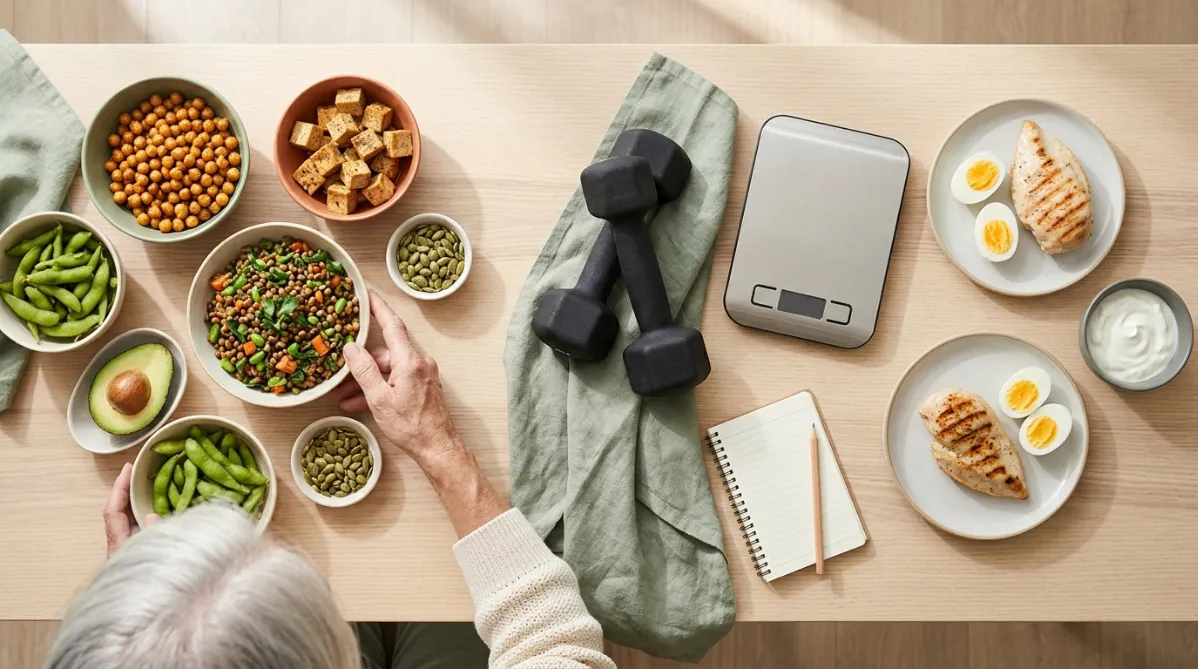
A bright, airy overhead flat-lay on a pale oak table in soft morning light. On the left, a vibrant plant-based protein spread in ceramic bowls: roasted chickpeas, marinated tofu cubes, lentil salad with herbs, edamame, sliced avocado, and a small dish of pumpkin seeds. On the right, a few contrasting items: a simple plate with grilled chicken breast, a hard-boiled egg halved, and a small bowl of Greek yogurt. Between the two sides, a pair of compact, matte-black hexagonal dumbbells rests on a folded sage-green linen towel, with a simple stainless-steel kitchen scale and a small open notebook with a pencil, suggesting tracking protein intake. A pair of weathered, elegant older hands, silver-haired and mid-60s, reaches in gently to pick up a bowl, with a casual cream knit sleeve visible. Natural window light casts soft diagonal shadows across the table. The palette is warm and muted: sage green, cream, terracotta, soft charcoal, with pops of fresh green and orange from the vegetables. Shallow depth of field, crisp focus on the food and dumbbells, gentle blur at the edges. The composition follows a clean editorial style with generous negative space at the top and right for headline text. The overall feel is modern wellness-magazine photography: calm, clean, and inviting, with tactile textures of linen, ceramic, wood, and fresh produce. Landscape 16:9 framing.
nutrition

Ficar vegetariano depois dos 55? O que um estudo com 108 praticantes de musculação revelou

BY DR. GYMBRO ·

Pensando em abandonar a carne enquanto continua a levantar pesos na casa dos 50, 60 anos ou mais? O estudo randomizado IMPACT com 108 idosos mostrou que vegetarianos e onívoros ganharam massa muscular e força em 12 semanas de treinamento resistido. Porém, o grupo vegetariano consumiu menos proteína (1,24 vs 1,58 g/kg/dia) e teve um ganho menor de músculo dos membros (+0,38 vs +0,66 kg). Os pesquisadores não conseguiram provar que a dieta vegetariana era não‑inferior, e o resultado muscular ficou estatisticamente inconclusivo. A seguir explicamos o que o estudo realmente demonstra, suas limitações e como definir metas de proteína se você treina com uma alimentação mais vegetal.
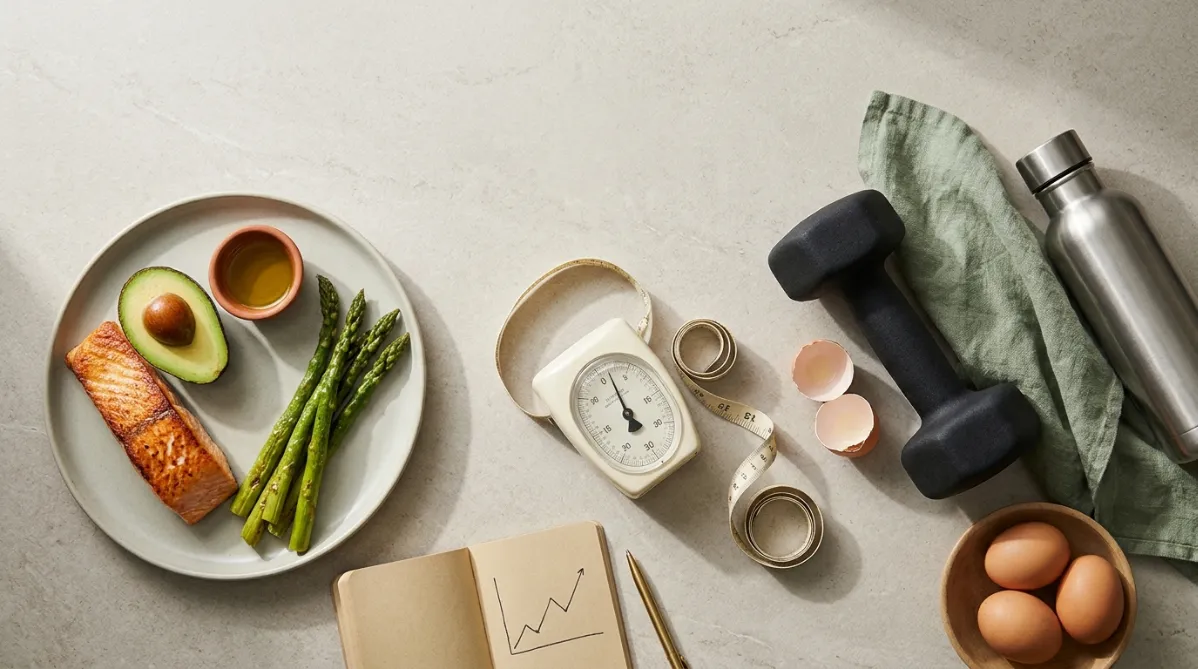
A bright, minimalist editorial flat-lay photographed from above on a pale warm-gray stone countertop in soft natural window light. On the left, a ceramic plate holds a keto-style meal: a seared salmon fillet with crisp skin, half an avocado with a glossy pit, a scattering of bright green asparagus spears, and a small dish of golden olive oil. On the right, a matte black dumbbell rests beside a folded sage-green linen towel and a slim stainless steel water bottle. A raw egg and a few whole eggs in a shallow wooden bowl add a protein cue. In the center, a clean analog kitchen scale and a flexible cream-colored measuring tape curl gracefully in a loose spiral, hinting at body composition tracking. A small open notebook with a minimal hand-drawn line graph, with no legible text, sits at the lower edge with a thin brass pen.

The palette is calm and modern: muted sage green, creamy ivory, warm terracotta accents from a small clay ramekin, and deep charcoal from the dumbbell. Shadows are soft and long, falling diagonally, giving gentle depth. The composition leaves generous negative space at the top and right for title placement. Shallow depth of field, crisp focus on the salmon and dumbbell, subtle film-like grain, and a refined, trendy health-journal look reminiscent of contemporary wellness magazines. Natural, airy, balanced, and slightly editorial, with no people, no text, and no futuristic elements.
nutrition

A Keto Preserva Músculo Durante um Corte? Os Dados de Massa Magra Surpreendem

BY DR. GYMBRO ·

A dieta cetogênica costuma ser apresentada como uma estratégia que preserva o músculo durante o corte, graças aos supostos efeitos anti‑catabólicos dos corpos cetônicos. Uma nova revisão narrativa em *Nutrients* testa essa ideia com dados clínicos e a considera insuficiente. Dietas cetogênicas reduzem principalmente a gordura, mas meta‑análises mostram perdas de massa magra ligeiramente maiores que dietas não cetogênicas. O problema é que DXA e BIA não separam músculo de água e glicogênio, então o efeito real sobre o músculo ainda é incerto. O que realmente protege o tecido magro é o trio conhecido de proteína adequada, treinamento de resistência e déficit moderado.
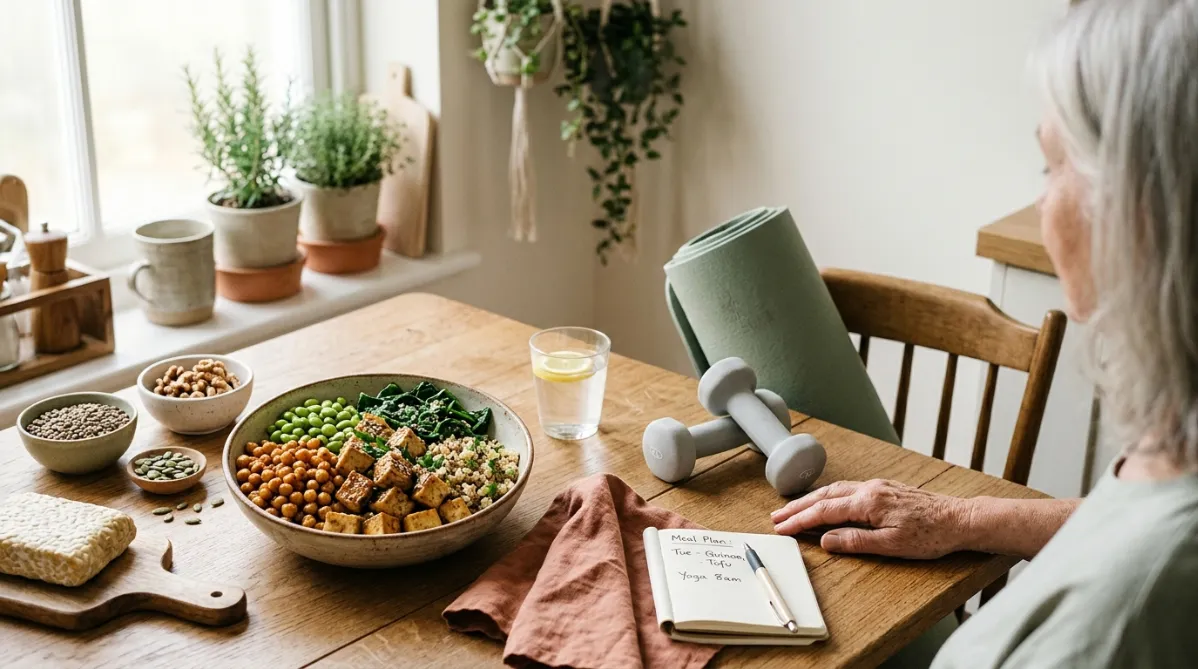
A landscape editorial photograph of a sunlit kitchen table, shot from a slightly elevated three-quarter angle. On the left, a rustic ceramic bowl holds a warm plant-based protein meal: roasted chickpeas, marinated tofu cubes, edamame, quinoa, and wilted greens, topped with toasted sesame seeds. Around it are small dishes of lentils, walnuts, pumpkin seeds, and a block of tempeh on a wooden board. On the right, a pair of weathered hands belonging to an older adult with silver hair, partially visible and softly out of focus, rests beside a pair of light dumbbells and a rolled sage-green yoga mat leaning against a chair. A linen napkin, a glass of water with a lemon slice, and a small handwritten notebook with a pen suggest careful planning. Soft morning light streams through a large window on the left and casts gentle long shadows across the pale oak tabletop. The color palette is muted and earthy: warm cream, sage green, terracotta, soft mustard, and natural wood tones. The background has shallow depth of field, with blurred shelves of herbs in pots and a few hanging plants. The mood is calm, hopeful, and health-focused, in the style of a modern lifestyle magazine or science journal feature, with clean composition, generous negative space in the upper right for headline text, and a subtle film-like grain. No text, no logos, no futuristic elements.
nutrition

Ficar vegano aos 65+? Massa magra caiu 1,15 kg em 12 semanas

BY DR. GYMBRO ·

Um ensaio randomizado de 12 semanas com 72 adultos de 65 anos ou mais mostrou que adotar o veganismo sem planejar a ingestão de proteína custou-lhes 1,15 kg de massa magra. O grupo onívoro manteve‑se estável. A inclusão de treinamento de resistência reduziu a perda para 0,62 kg, o que ajudou consideravelmente, mas não eliminou o efeito. O verdadeiro culpado foi a redução da ingestão de proteína – cerca de 20 a 28 g/dia – e não os vegetais em si. A seguir, veja o que os dados revelam e como proteger seus músculos em uma dieta baseada em plantas.
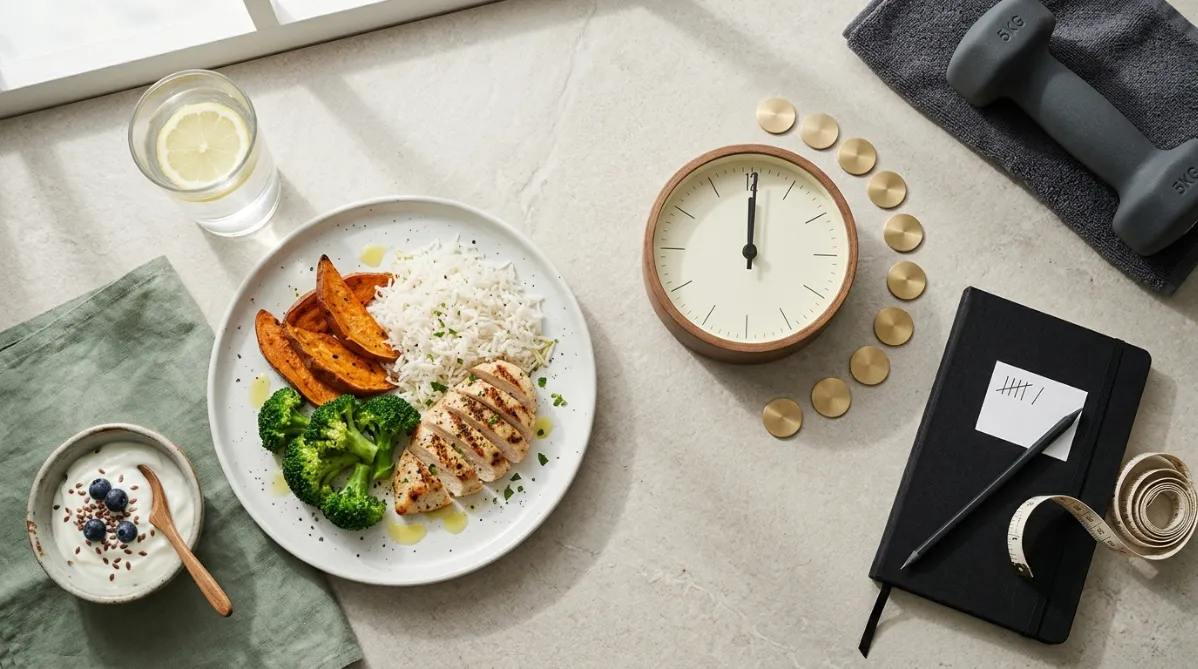
A wide, editorial-style flat lay photographed from above on a pale warm-gray stone surface, bathed in soft natural window light with gentle diagonal shadows. On the left side, a minimalist matte white ceramic plate holds a balanced bulking meal: sliced grilled chicken breast, a mound of fluffy basmati rice, roasted sweet potato wedges, and bright green broccoli, with a drizzle of olive oil glistening. Beside it sits a tall glass of water with a lemon slice and a small bowl of Greek yogurt topped with blueberries. On the right side, a round analog clock face is subtly placed, or a simple wooden clock with a minimalist design, its hands marking noon, with a soft arc of eight small brushed-brass discs arranged in a curved line beside it, suggesting an eight-hour eating window. A sleek black notebook with a pencil rests nearby, with a few hand-drawn tally marks and a tape measure loosely coiled next to it. A single dumbbell with a matte charcoal finish sits at the top right edge, partially cropped, hinting at strength training. The color palette is muted and sophisticated: sage green, warm cream, terracotta, soft charcoal, and touches of brass. Generous negative space on the right third for title text overlay. Shallow depth of field with crisp focus on the plate, subtle film grain, and a calm, modern wellness-magazine aesthetic reminiscent of contemporary health and fitness journals. Clean composition, natural textures like linen napkin and speckled ceramic, and no people or text visible.
nutrition

Jejum 16:8 durante o bulk: mesmo músculo, menos da metade do ganho de gordura

BY DR. GYMBRO ·

Atletas que fizeram bulk dentro de uma janela de 8 h ganharam a mesma massa muscular e força que quem come normalmente, mas acumularam menos da metade da gordura. Surpreendentemente, o jejum não foi a causa mágica: o grupo 16:8 simplesmente ingeriu menos calorias que o excedente prescrito, resultando também em menor ingestão de proteína e carboidrato. Este ensaio clínico randomizado de 12 semanas mostra que a alimentação restrita ao tempo funciona como uma ferramenta de aderência para um bulk mais magro, e não como um truque metabólico. Confira os números, a meta de proteína confirmada e quem deve ou não experimentar essa estratégia.

This page is available in